
NextCycle Michigan Kicks Off Newest Cohort
NextCycle Michigan Kicks Off Newest Cohort Focused on Public-Led and Recycling Supply Chain Solutions
Participating teams will receive customized coaching to advance initiatives toward implementation and fill gaps in Michigan’s circular economy.
Last month, NextCycle Michigan welcomed a new cohort focused on public sector programs and recycling supply chain initiatives. Sixteen teams gathered at Western Michigan University to kick off the six-month program with interactive workshops and individual coaching during a two-day in-person academy.
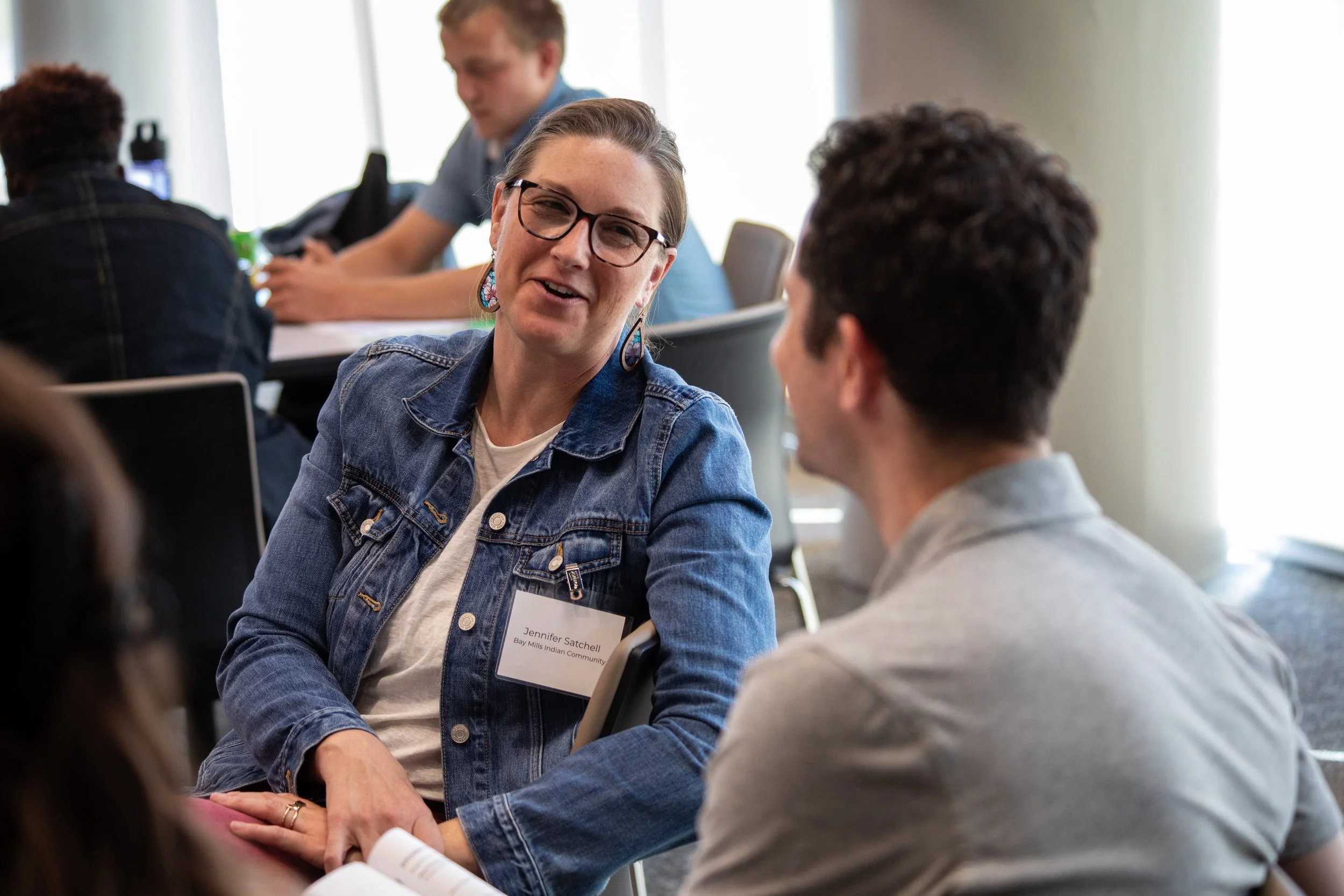
NextCycle Michigan, an initiative of the Michigan Department of Environment, Great Lakes, and Energy (EGLE), is an accelerator that provides operational and technical support to advance projects and businesses that divert material from landfills and bring solutions to expand Michigan’s circular economy. Since its inception in 2020, NextCycle Michigan has supported 21 cohorts and 171 teams.
NEW COHORTS
During the two-day academy, participants learned about Michigan’s circular economy landscape, identified gaps in their business models and project plans, practiced pitch building and storytelling, recognized sustainability drivers, and were introduced to potential funding pathways.
Public-Led Recycling Solutions
This cohort focuses on programs and infrastructure that will increase access to recycling, divert food scraps from landfills, expand battery recycling and reduce textile waste. Selected teams include local governments, a Tribal community and mission-based non-profits.
Bay Mills Indian Community (Brimley, MI): Seeking diversion pathways to reduce waste and utilize unused food for animal feed or composting.
Brookelyn Elisa Promise (Grand Rapids, MI): Launching a youth-led enterprise to divert post-consumer textiles from Michigan landfills and transform them into clean, baled feedstock for recycling.
City of Big Rapids and Mecosta Recycles (Big Rapids, MI): Expanding its successful household battery recycling drop-off program to additional city facilities.
Oakland HOPE (Pontiac, MI): Launching HOPE to Table Collective, focused on transforming surplus food into nutritious meals distributed to food pantry clients.
Recycle Ann Arbor (Ann Arbor, MI): Piloting a container reuse program that will collect, industrially wash, inspect, and redistribute glass bottles and jars for local food and beverage producers, retailers, and institutional kitchens.
Recycle Here! (Detroit, MI): Seeking to increase revenue streams of Detroit’s only free public drop-off recycling center.
St. Suzanne Cody Rouge Community Resource Center (Detroit, MI): Establishing the Hub of Recycling and Awareness to build a shared recycling culture and increase material diversion across the community.
ZeroWaste.Org (Ann Arbor, MI): Deploying a gamified waste-reduction platform that enables residents to sign up, earn points, and win prizes based on their waste and recycling behavior.
Recycling Supply Chain Solutions
This cohort is working on projects ranging from redistribution of surplus food, reuse and recovery of construction materials, conversion of thermoplastics and more.
Commercial Solar Panel Recycling (Phillipsburg, NJ): Aims to establish a Michigan location dedicated to complete solar panel recycling and processing.
Detroit Decontaminated (Detroit, MI): Establishing a scalable pilot and integrated tracking and reporting platform that recovers surplus food and organic kitchen waste generated by restaurants for redistribution as prepared meals, upcycled food production, and compost.
Drop N Bins, LLC (Caseville, MI): Expanding its existing roll-off dumpster rental business to include a dedicated construction and demolition material recovery and reuse program.
Ecourage USA, Inc (East Lansing, MI): Aims to expand its refill stations for liquid home and personal care products into Michigan-based retailers, hospitality, campus, and institutional locations.
Fibrill (Holland, MI): Deploying modular equipment at material recovery facilities or as a scalable extension to paper mills that allows for efficient separation and recovery of fiber from coated paper packaging.
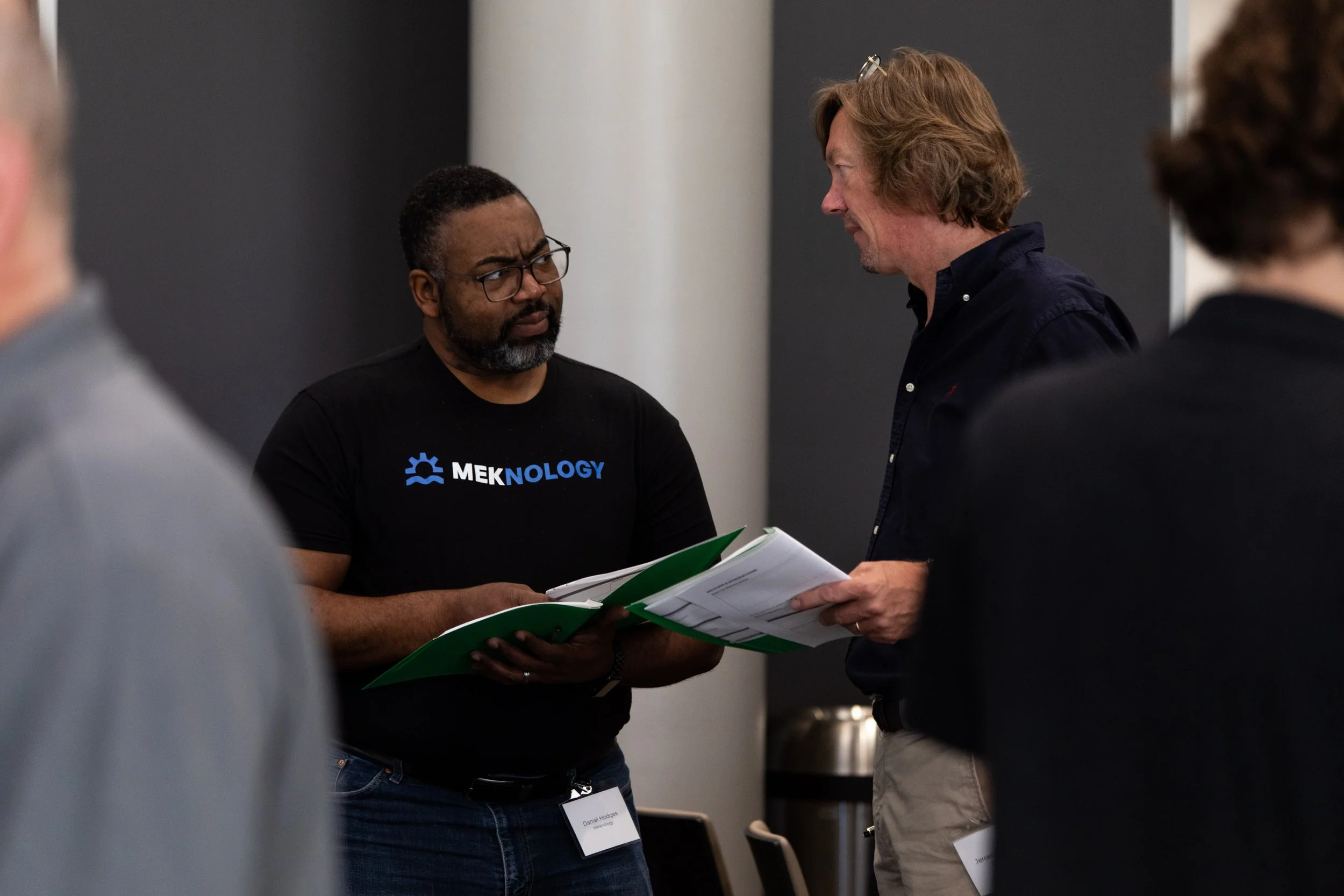
Meknology (Kalamazoo, MI): Utilizes patented equipment to convert organic waste generated by breweries and distilleries into drinking water, soil amendments and ingredients that can be upcycled into non-alcoholic beverages and dried grain products.
ReVamp Clothing Swap Festival (Detroit, MI): Seeking to scale its quarterly clothing swap festivals into a multi-city network with permanent community thrift hubs and textile recovery systems.
Revolin Sports Inc. (Holland, MI): Seeking to scale operations that convert post-consumer and industrial thermoplastics into high-performance honeycomb core panels.
UPCOMING NEXTCYCLE MICHIGAN ACTIVITIES
NextCycle Michigan will run a special accelerator cohort focused on electric vehicle (EV) battery reuse and recycling this year. The application period opens on June 22, seeking solutions that ensure safe end-of-life management of EV batteries in Michigan. Eligible entities include for-profit businesses, including early-stage start-ups and established companies, universities, research groups, tribal entities, non-profit organizations, and public-sector agencies.
On June 24, the NextCycle Michigan Summer Showcase will take place in Traverse City, MI. Fifteen teams will pitch their recycling technology and organic recovery projects to potential investors and partners while competing for monetary awards. The event is free and open to the public; however, registration is required.
Find more information on the NextCycle Michigan websiteandLinkedIn page.