
Beyond the Landfill: Three Unique Solutions for Food Scraps
Collection That Makes Compost Possible
On a fall week in Ferndale, Michigan, the city’s food-scrap drop-off bins only get into real trouble when pumpkins show up in the wrong place. The lids cannot close, squirrels get in, and suddenly the system looks like the exact mess people worry composting will become.
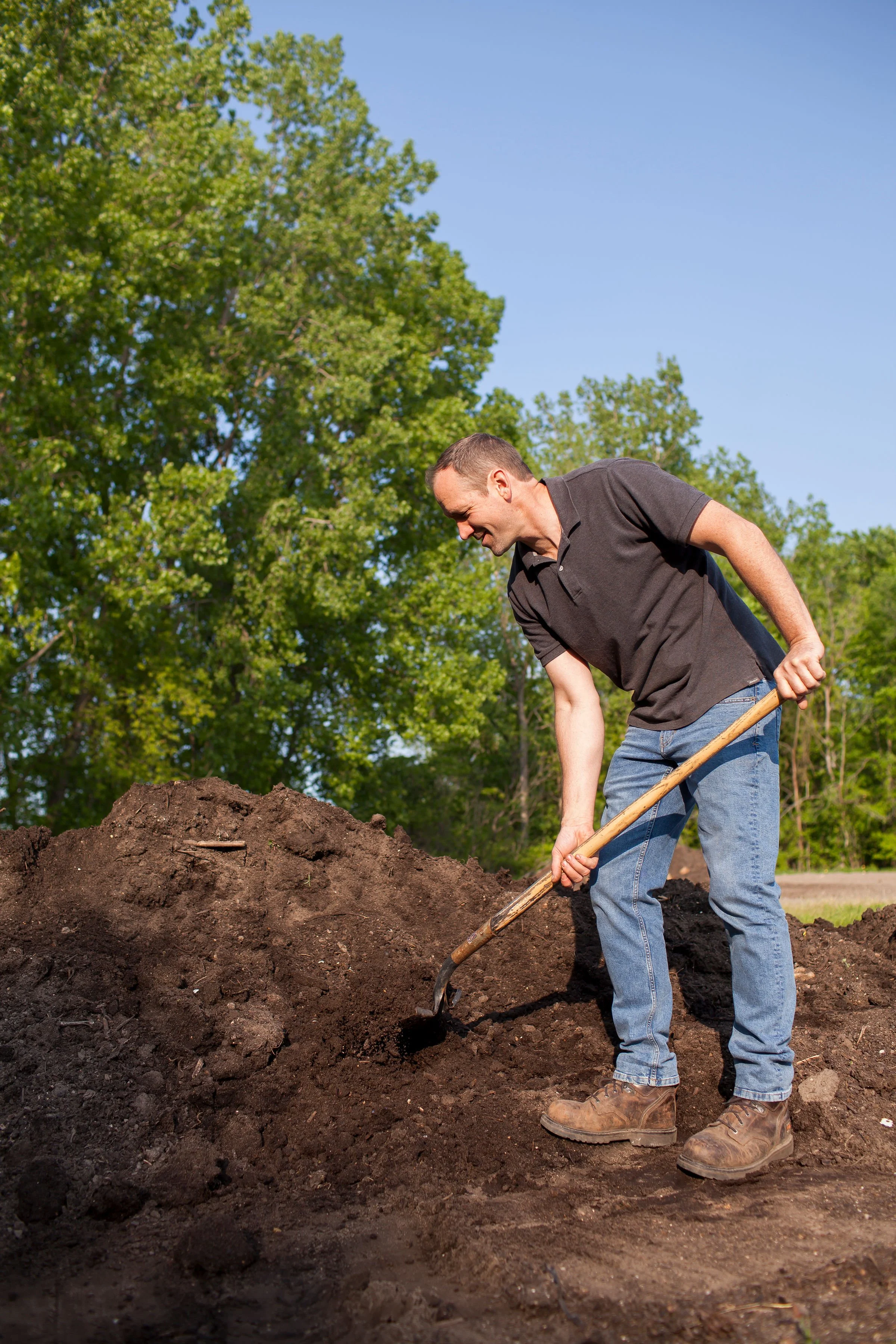
Luke Malski, Grand Rapids Compost
But that little seasonal chaos also points to the real make-or-break issue for many food-scrap diversion programs: not whether people care or whether compost can be made, but collection. Collection is the starting point that shapes everything else: convenience, participation, cleanliness, and whether food scraps reliably make it to compost. In fact, most Michigan households still do not have a simple, built-in way to manage food scraps. In 2023, only 10–23% of residents report having access to residential food-waste collection.
Across the state, very different efforts by three NextCycle Michigan teams are chasing the same goal: keep food scraps out of the landfill by building reliable collection paths. These three different solutions include:
24/7 drop-off in a dense inner-ring suburb,
Curbside weekly pickup designed to feel as normal as taking out the trash, and
A hub-style model in Detroit, where haulers and businesses bring material to a collection site.
Each model brings a different approach to effectively collect food scraps and help ensure Michiganders can do the right thing. These are solutions we can learn from and scale in regions across the state to solve shared challenges in collection and recovery of food scraps.
Ferndale’s 24/7 Food Scrap Drop-Off: Design Around Real Life
The City of Ferndale’s food scrap drop-off program has been led by Logan Applebee, Zero Waste Systems Manager. The program is open 24/7, allowing residents to drop off food scraps, napkins, paper towels, and BPI-certified compostable packaging. Collection sites are strategically located in suburban neighborhoods to serve single-family households, with an additional site downtown to accommodate multifamily residents. Applebee noted that the city’s composting program was designed to be easy. It is available whenever residents are out moving through their day, running their errands. It also solves an equity problem for residents who are least served by traditional curbside programs, like multifamily buildings.
The program began as a pilot with support from the NextCycle Michigan Accelerator program. It was originally planned for 250 households but expanded to 400 households because demand was higher than expected. It then opened up more broadly as capacity grew. Today, it’s sitting at close to 1,400 households enrolled, which Applebee framed as roughly a 10% participation rate for the city’s composting program.
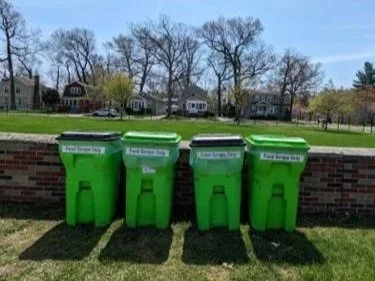
Ferndale Compost Carts
In 2021, Ferndale received a $10,000 NextCycle Michigan grant to purchase a flow digester for the composting program. Over time, the city moved away from that path after weighing the ongoing cost and labor and instead doubled down on the drop-off system that was already proving it could scale.
Once collected, Ferndale’s food scraps go to a composting facility in Wixom which Applebee described as a public-private arrangement involving Spurt Industries and the City of Wixom. That destination matters because it completes the promise of a circular loop: residents have an easy on-ramp and the material has a dependable place to go for processing.
Grand Rapids Compost: Making Curbside Feel Normal
Grand Rapids Compost, a family-run composting company led by Luke and Nikki Malski, is building a curbside model that mirrors what people already understand: you get a pickup once a week. The system is meant to be the organics version of taking out the trash - predictable, reliable, and simple.
Right now, they’re still in the early chapter, with seven residential subscribers plus a couple of local coffee shops. They’re working to grow that subscriber base intentionally, knowing that once they hit a critical mass, the route becomes easier to sustain and expand. Nicole described their broader dynamic as trying to “jump in and ride the wave” of growing community composting interest. They’ve kept a drop-off option at their home site for people who want to participate without subscribing, and they also offer yard waste drop-off. After six months, subscribers can get a can of compost as part of their subscription, and compost is available for sale anytime.
“What was your biggest takeaway from the NextCycle Accelerator Program?”
“The full-service aspect of it. It’s not like, well, we can just help you on the licensing business filing side. But anything that we needed, any area that we were struggling in. It was like, if we aren’t the people that can help you, we’ll put you in touch.”
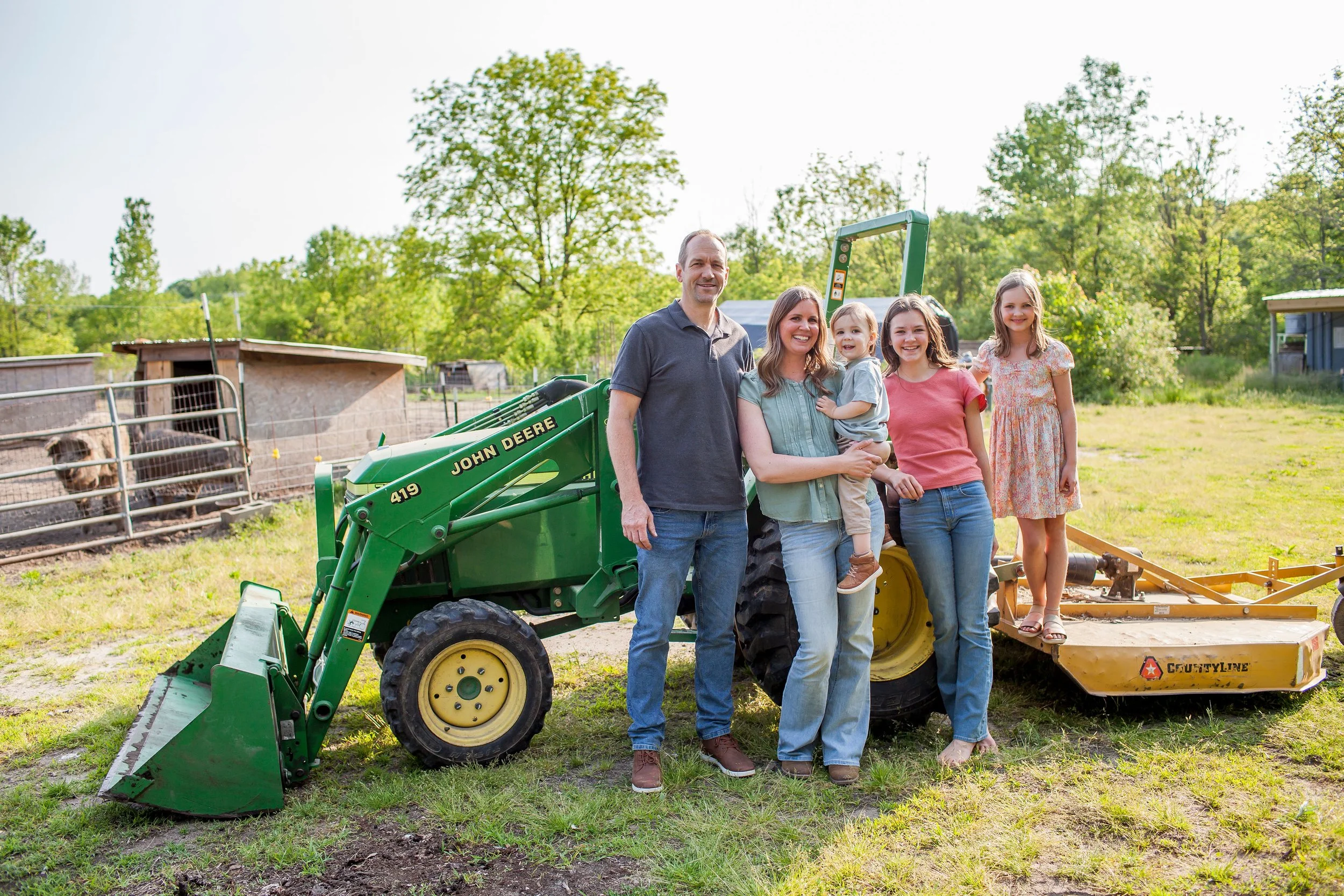
The family behind GR Compost
Behind the scenes, the curbside push is tied to hard-earned experience and the right connections at the right time. The Malski’s described years of learning how to handle food waste through restaurant pickups, building a system that worked, then adapting when COVID hit. The team found itself with the knowledge and infrastructure, but suddenly without the same flows that made the business predictable pre-pandemic. But instead of walking away from the problem, they pivoted and plugged deeper into Michigan’s composting community through NextCycle Michigan, ultimately collaborating with peers like Wormies and Organicycle.
NextCycle helped in a few other concrete ways too. For instance, they received a $5,000 Harvest Grant, which helped cover practical startup needs. And on the marketing side, they described getting support from people who could actually translate their vision into something shareable. Lastly, it helped them understand local laws and permitting. Because the guidance came through NextCycle Michigan, an initiative funded by EGLE, they knew the information reflected the standards and expectations of the state’s regulatory authority.
As Grand Rapids Compost builds subscribers, they’re exploring changes to their composting site over time, including the possibility of shifting operations to a different nearby field as part of a longer-term setup. The short-term focus is to grow the route, build steady income, and set up the next phase without rushing past the fundamentals.
Sanctuary Farms: A Drop-Off Hub for Haulers and Businesses
Sanctuary Farms’ collection model starts at a different point in the chain: they’ve built a reliable landing spot for businesses and food haulers that need somewhere local to take food scraps. From there, the team turns that steady feedstock into compost using a tightly managed recipe designed to produce high-value compost. And this hub-and-spoke collection approach creates a dependable outlet for haulers and generators, which then supports broader diversion.
Co-founders, jøn kent and Parker Jean lead the effort. Their approach reflects principles of deep ecology and community resilience. By transforming food waste into nutrient-rich compost, they restore vitality to the soil, support urban green spaces, and foster connections between people and the natural systems that sustain them. This work not only addresses environmental challenges but also strengthens community capacity to adapt to climate change, reduce waste, and cultivate a sense of shared stewardship over local resources.
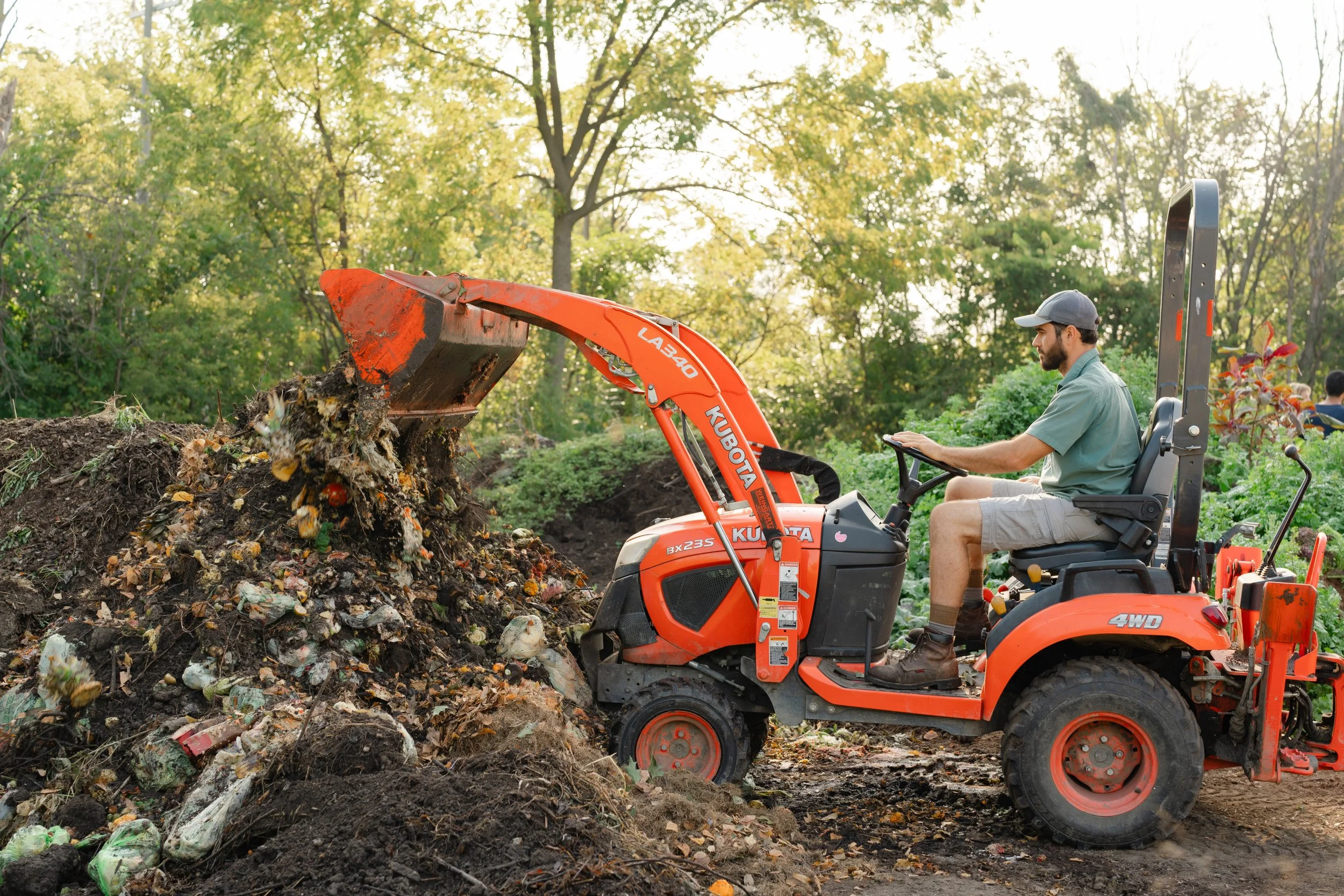
Sanctuary Farms Compost Site
A big catalyst for scaling was the NextCycle Michigan accelerator. The program helped them translate a strong concept into a clearer growth plan, including support to design their site and build out the financial case for expansion. kent described technical assistance that helped them map what it would take to secure land and scale operations in a way that could actually pencil out over time.
Right now, Sanctuary Farms is primarily business-focused, but they’re building toward wider access. kent noted grant support through Michigan’s Department of Agriculture and Rural Development (MDARD) and Department ofEnvironment, Great Lakes, and Energy's (EGLE) to build out capacity for a community drop-off space, saying it was not yet set up but expected to be completed in 2026.
“NextCycle was able to show us that this work is not only appreciated and supported, but is necessary and needed within our state.”
What Changes When Collection is Solved
Composting can sound like a single solution, but these three stories show it’s really a set of collection choices that determine whether diversion happens at all.
Ferndale is proving that drop-off can scale when it’s designed around access, including multifamily, and when it’s available 24/7 so residents don’t have to manage stink and storage at home.
Grand Rapids Compost is proving that curbside can start small, then grow, as long as the weekly pickup is consistent and the service is simple enough to feel normal.
Sanctuary Farms is proving the value of a hub where haulers and businesses can reliably drop material, while building toward broader community drop-off capacity.
Different angles, same goal: give food scraps a clear, workable path away from the landfill. And once that path exists, the pumpkin problem becomes what it should be, a small, fixable bump in a system that’s already doing its job.
These are just a few examples of the exciting solutions Michigan businesses and communities are launching across the State. Other NextCycle Alumni such as Wormies, Metro Food Rescue, Make Food Not Waste, the City of Ann Arbor, and Emmet County, among others, also demonstrate scalable solutions to help ensure food scraps are recovered in Michigan and kept out of our landfills.
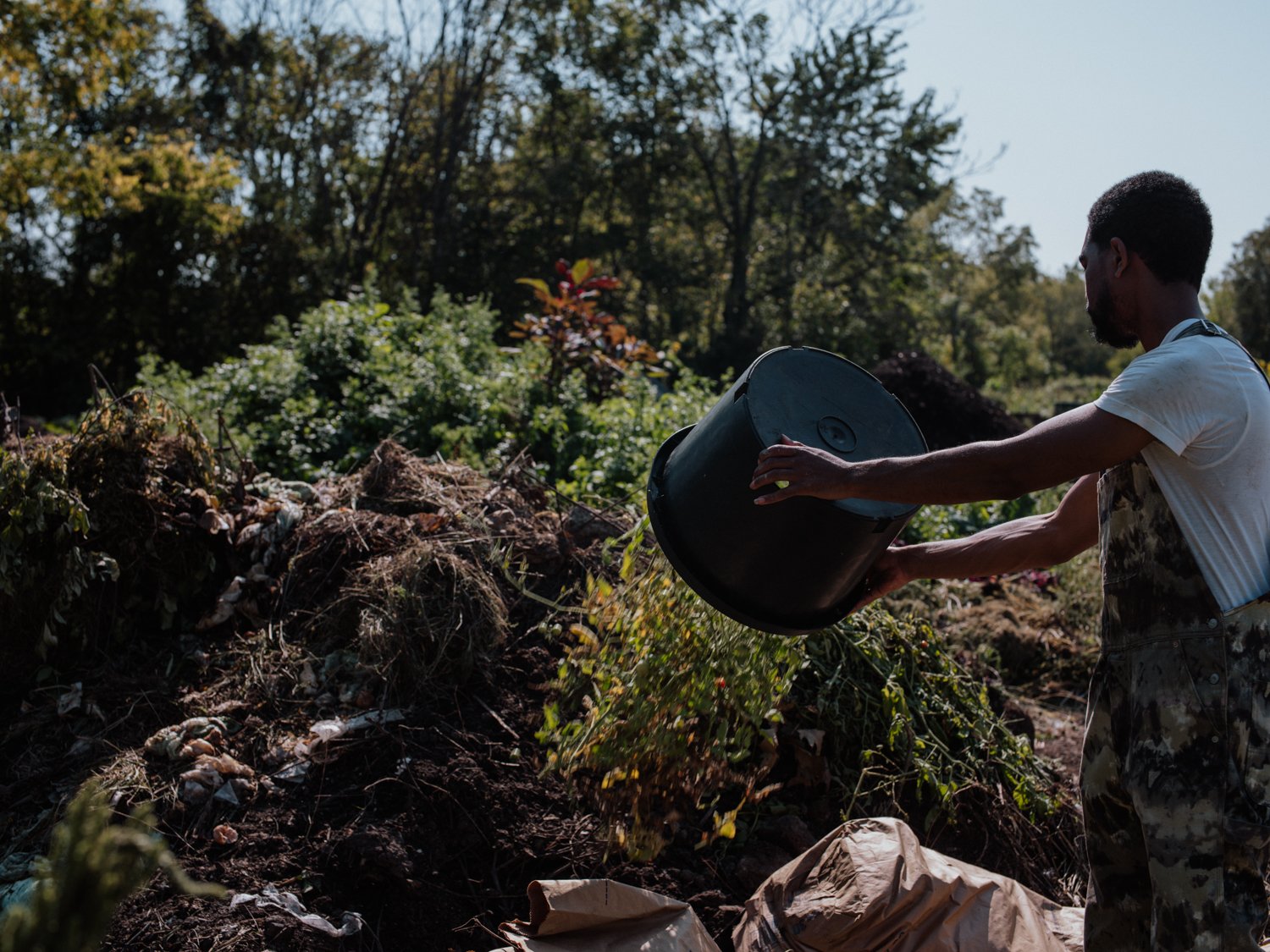
Sanctuary Farms Compost Site