
EV Batteries are Getting a New Life in Michigan
Electric vehicle (EV) batteries are lasting longer than manufacturers initially predicted. Many outlive the typical eight-year or 100,000-mile warranty and are now expected to last 12-15 years, some potentially lasting up to 20 years. Even after these batteries reach the end of their life powering vehicles, they can still retain approximately 80% of their original charge capacity. These batteries still have valuable life remaining, making them well suited for repurposing in other energy-storage applications or recycling to reclaim valuable materials like lithium, cobalt, and nickel that can be utilized to make new batteries.
While the opportunity to capture the remaining value of these batteries is clear, there are challenges to safely and effectively recover them for direct reuse, repurposing, or material recycling. Some difficulties are due to the complex and varied designs, shapes, and chemistries. Additionally, batteries can retain a residual charge, posing a fire or explosion hazard that require systematic processes for safe handling and risk mitigation. Even after EV batteries are discharged, diagnostics, handling, and extracting materials requires complex processes and treatments.
Predicting future EV battery volumes is challenging because adoption is shaped by competing policy, economic, and market factors. Recycling economics are also uneven, as some EV batteries cost more to recycle than the recovered materials are worth
Still, uncertainty about future EV sales does not change the need to recover the millions of batteries already on the road. Early-generation EV batteries are beginning to reach retirement, while larger waves from vehicles sold since 2016 are expected to become available for reuse, repurposing, or recycling over the next decade.
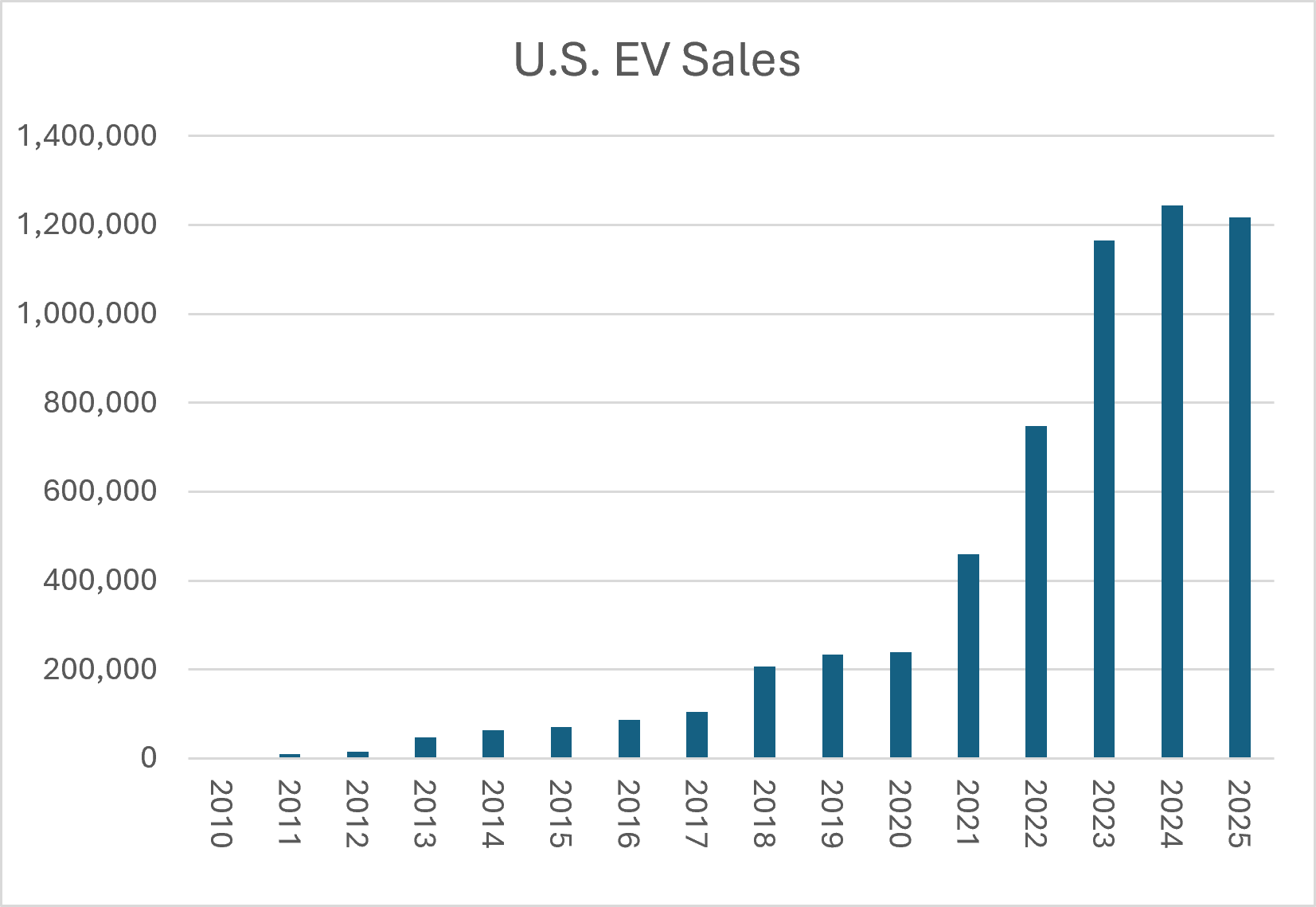
The good news – according to S&P Global Mobility, recycled batteries could supply approximately 36% of global cobalt demand, and 31% and 22% of nickel and lithium demand by 2037, respectively. This can take pressure off mining natural resources and, with proper processing, reduce impacts from toxic elements.
How is Michigan approaching retired EV batteries?
A battery’s removal from a vehicle is not necessarily its end of life. Michigan organizations are building the testing, handling, reuse and recycling infrastructure needed to determine the highest and best use at every stage.
The NextCycle Michigan Accelerator has supported several organizations working on EV battery reuse and recycling. Funded by the Michigan Department of Environment, Great Lakes, and Energy (EGLE), this free program provides coaching and mentoring in business and operational planning, access to technical and circular economy expertise, connections to supply chain partners, identification of funding pathways, development of marketing strategies, and much more. These organizations have not only advanced their initiatives with the accelerator’s support but also have made connections, moving closer to the implementation and scaling of EV battery solutions.
Great Lakes Recycling
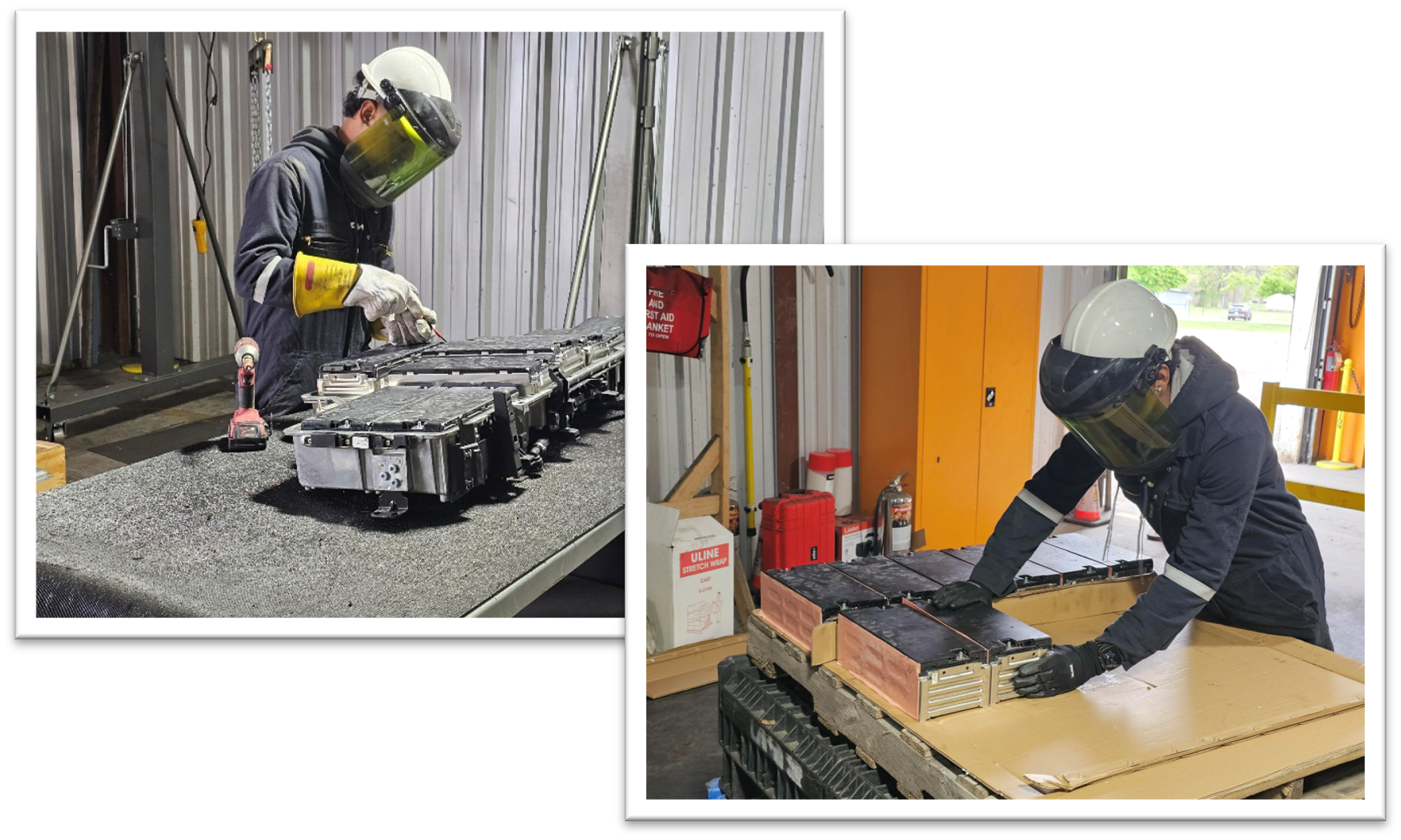
GLR staff dismantling a battery pack for reuse testing.
NextCycle Michigan alumni Great Lakes Recycling (GLR), located in River Rouge, Michigan, is a 90-year-old, family-owned company that transitioned from ferrous metal recycling to focus exclusively on electronics and EV battery recycling. GLR moved into a 60,000 square foot facility in September 2025, quadrupling its space to scale its battery processing operation. The company can process 100-150 battery packs per day using advanced safety protocols. GLR is pursuing UL1974 certification to become one of only two U.S. companies able to officially certify batteries for reuse.
“Many incoming battery packs are still good with only minor issues like a bad fuse,” said David Kaminski with GLR. “Testing and certification can extend battery life significantly in second-life applications.”
Every incoming load of batteries is weighed, tagged, categorized, and recorded in an electronic system. Questionable loads are quarantined in shipping containers for safety, while approved loads move to the staging area. The facility is monitored for temperature fluctuations that automatically trigger camera alerts and notify the local fire department.
GLR has improved processes to dismantle standard battery packs in 4-6 minutes and drop voltage in half repeatedly to safe levels. The company focuses on the dismantling work, allowing downstream partners to concentrate on recycling accessory components and extracting black mass.
Through training offered by the Automotive Recyclers of Michigan, GLR earned Level 3 certification to remove battery packs from vehicles. GLR is also working with scrapyards and auto recyclers to increase awareness of safe battery handling and the potential revenue available through responsible battery collection.
GLR is currently partnering with Volt Harbor to emphasize reuse before recycling. They’ve jointly applied for NextCycle grant funding to develop battery testing for reuse as energy storage systems (ESS). ESS can include portable power for construction sites and concerts, grid stabilizers for preventing brownouts, and large-scale systems for electricity arbitrage.
“Battery packs at a 75-80% state of health no longer function effectively in vehicles but can be reused in energy storage systems down to a 30% state of health,” added Kaminski. “That provides an additional 50-60% useful life before final recycling.”
Volt Harbor
Volt Harbor originated from NSF-funded research at the University of Michigan focused on cost-effective reuse for retired EV batteries. Its core software innovation allows ESS modules to utilize various battery makes and models with varying energy capacities, voltage outputs, and degradation without requiring expensive balancing equipment.
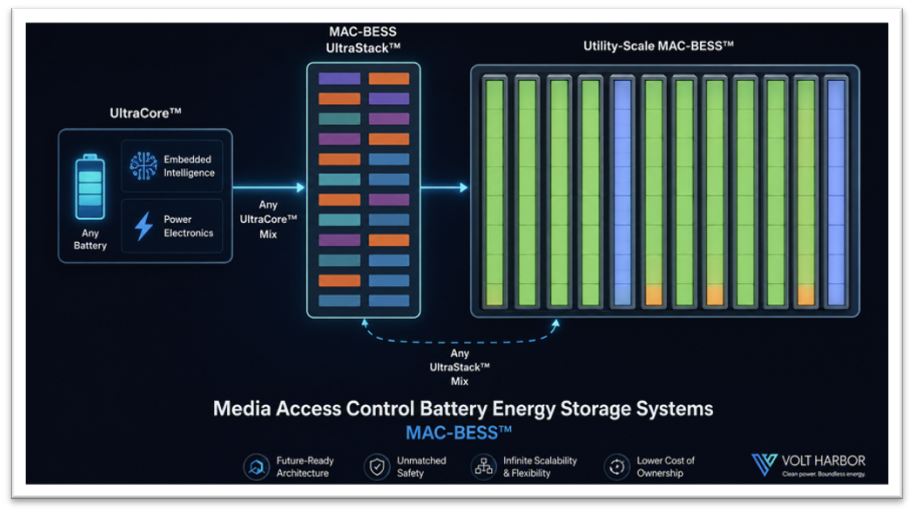
Volt Harbor’s Energy Storage Systems
The company participated in the NextCycle Michigan accelerator primarily to understand the Michigan ecosystem and make connections with potential partners. The program helped refine their business model and identify blind spots, particularly improving the understanding of the commercial and industrial market and local supply chain.
“Through NextCycle Michigan, we met a Michigan-based project developer who is now working with us as a channel partner for sales and handles installation services,” said Al Avestruz with Volt Harbor.
Volt Harbor’s collaboration with GLR would establish a battery supply chain, where GLR would pursue the certifications and processes needed to evaluate batteries for reuse and conduct initial testing, while Volt Harbor would perform additional evaluation and integrate suitable batteries into energy storage systems.
“Our target market is commercial and industrial facilities, where battery storage costs and electricity costs are particularly high,” said Avestruz. “Together, the UltraCore modules enable power supply and provide multiple integrated functionalities where the grid infrastructure cannot handle demand, reducing the need for expensive grid upgrades.”
Data centers also emerged as a key opportunity, with wildly varying requirements across customers. This can be addressed with Volt Harbor’s modular, software-defined platform, replacing the front-end Power Stack between grid and the data center with integrated units at a fraction of the cost and footprint while enabling mass customization and rapid deployment.
“Repurposing batteries reduces new battery manufacturing needs, extends existing battery life, enables more EV adoption, and creates a spiral of increasing circular economy benefits,” added Avestruz. “EV battery reuse has a multiplier effect on sustainability impact.”
The company is also working on a pilot project with the DTE Emerging Technology Fund to develop an energy storage system that supports EV charging – storing energy during low-demand periods to supply power during expensive peak times when the grid is constrained. The pilot installation is scheduled for spring 2027.
ReCharge Recycling
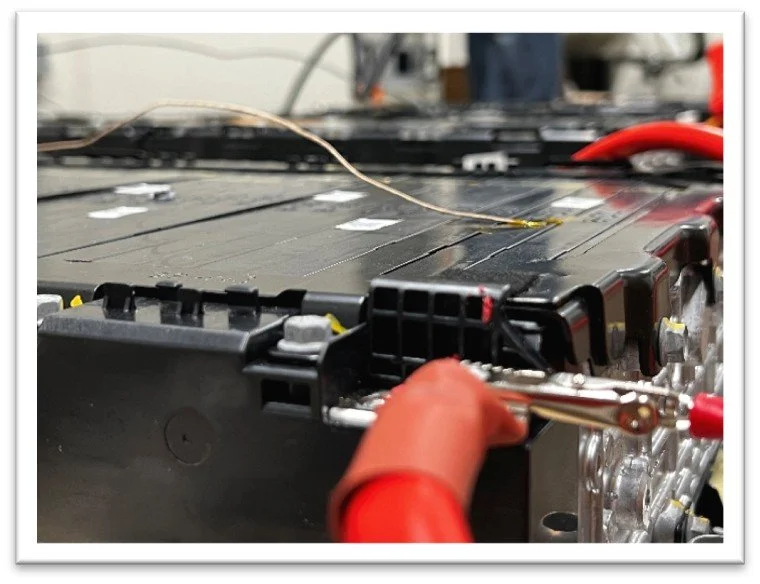
ReCharge Recycling evaluating the state of health of a retired EV battery.
ReCharge Recycling, founded in 2022 as a U.S. subsidiary of United Battery Recyclers International, tests batteries for next-best use. The company participated in the NextCycle Michigan Accelerator, gaining critical connections and validating its business model – planned direction, existing end markets, and EV battery volumes.
“Our focus is on extending battery life over immediate recycling,” said Josh Czarnota with ReCharge Recycling. “This is driven by both economic value – batteries with remaining capacity are worth more – and environmental benefits that avoid recycling machinery and offtake processes.”
They estimate that 90–95% of the batteries they receive still retain usable capacity, demonstrating that removal from a vehicle does not necessarily mean a battery has reached the end of its useful life.
ReCharge Recycling has an active grant project with the University of Michigan Dearborn, that focuses on creating an algorithm that reduces testing time from 4-6 hours to 5-10 minutes. This would dramatically increase daily testing capacity and operational efficiency.
The company is also looking to branch into adjacent services. It plans to sell battery health data to insurance companies and professional auto dismantlers. Additionally, they are developing a business-to-business e-commerce platform for selling battery components (e.g., bus bars, bolts, and cases) that typically get discarded when batteries are recycled.
How can you get involved?
The Michigan Department of Environment, Great Lakes, and Energy (EGLE) is conducting a special EV battery reuse and recycling accelerator through the NextCycle Michigan program. Those accepted into the free program will receive coaching and mentoring in business and operational planning, access to technical and circular economy expertise, connections to supply chain partners, identification of funding pathways, development of marketing strategies, and much more.
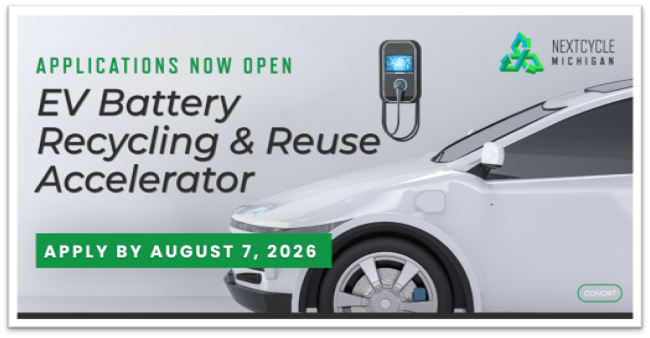
Apply by August 7, 2026: https://nextcyclemichigan.com/apply-ev-battery-recycling-accelerator
The application period has opened, seeking solutions that include repurposing EV batteries to power portable energy stations, dismantling batteries to recover critical minerals, and other innovative processes that collect, discharge, reuse, recover or recycle end-of-life batteries and components. The deadline to apply is August 7, 2026.
NextCycle Michigan is always looking for great partnerships with active organizations. Partnerships can take the form of working with a specific team to advance a solution, sponsoring showcase awards or full accelerator tracks, speaking to teams to share current market information, and more. If your organization produces, processes, transports, or supports components of EVs or EV batteries, contact NextCycle Michigan at NextCycleMI@recycle.com to discuss how you can get involved.
You can also get involved by spreading awareness of this opportunity. Share the link above with your network via email, newsletter, and social media. You may connect someone with an opportunity to implement or scale their initiative.