
Making Reuse the Default
A World Built for Throwing Things Away
It’s lunchtime and you order a salad. It arrives in a plastic bowl with the fork sealed in a plastic sleeve. You eat then throw it away, and there’s no thought or system to interrupt the moment.
Somewhere else, a construction worker finishes a bottle of water, throws it away, and grabs a new bottle.
Across town, a woman opens her closet, pulls out her grandmother’s leather jacket, and hesitates. It no longer fits her life, so she considers throwing it away. But it still holds meaning, so it stays in her closet unused.
These moments happen every day. Not because people don’t care, but because disposal is the easiest option.
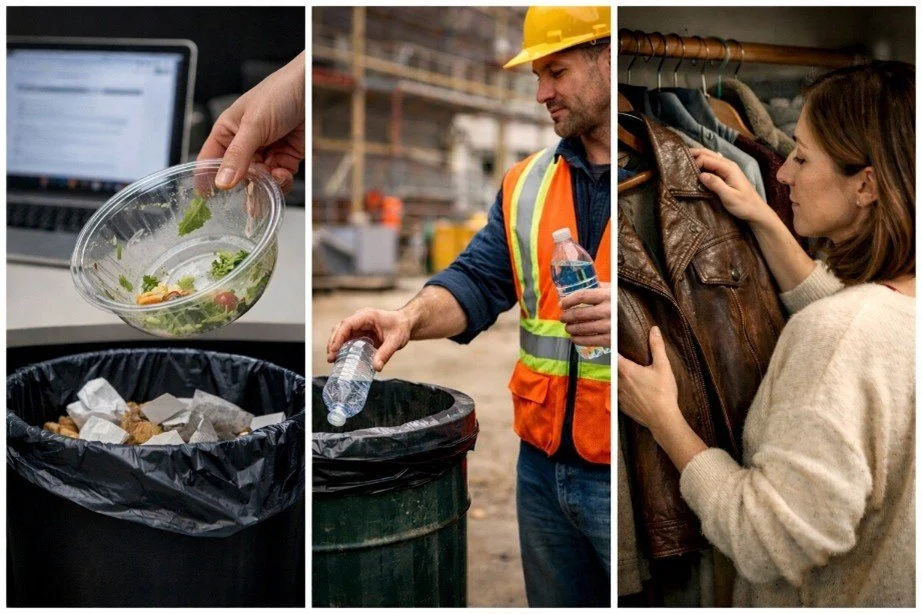
Our current system is designed so that waste, not reuse, is the default.
Why We Default to Waste
Most people don’t wake up intending to create waste. They’re simply trying to get through their day and not questioning the consumption and waste system they exist in.
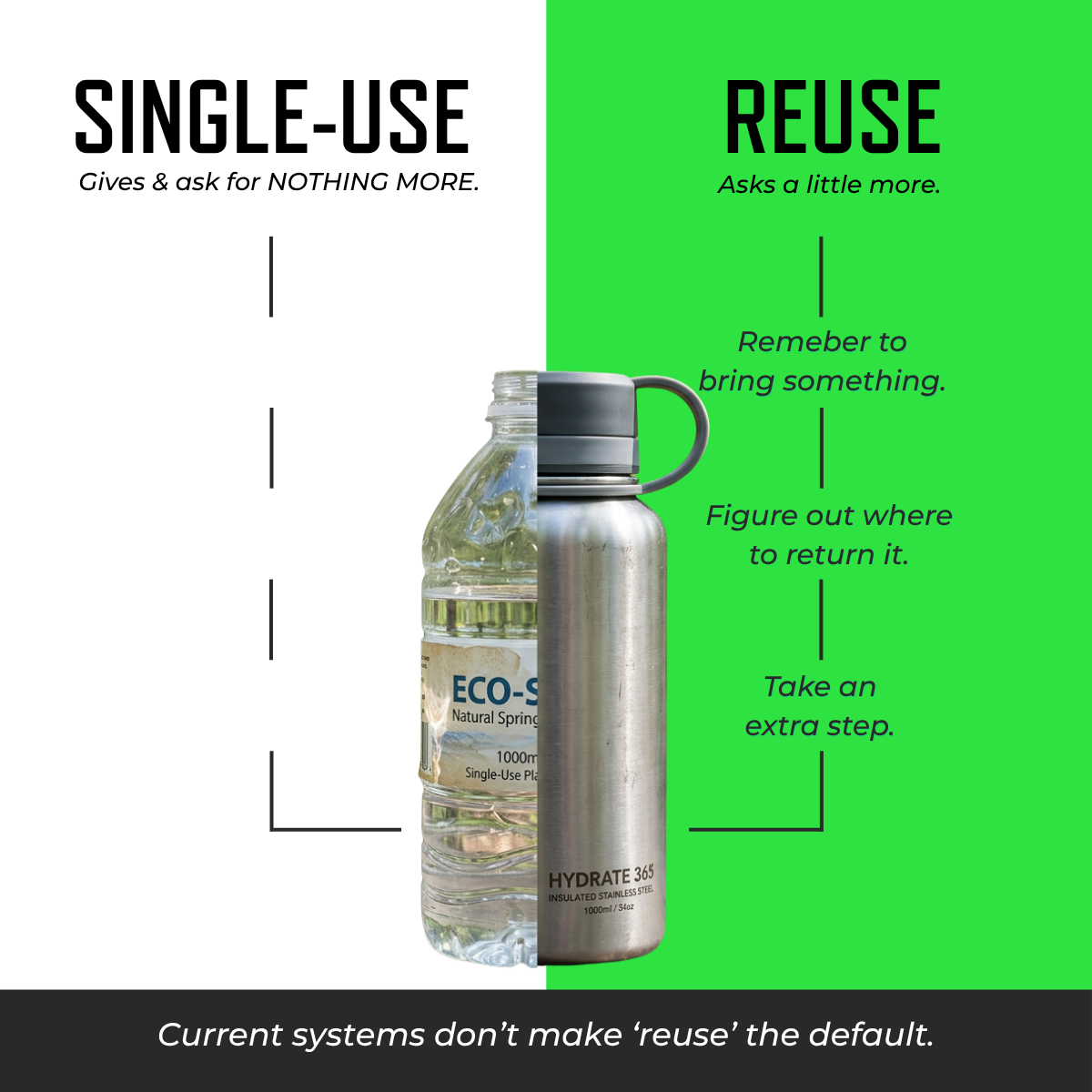
Single use is easy because it removes responsibility. It delivers exactly what people need in the moment: a container, a meal, a drink, and then asks nothing more.
Reuse, by contrast, has historically asked for just a little too much:
Remember to bring something
Figure out where to return it
Take an extra step
Three NextCycle Michigan teams didn’t ask, ‘How do we convince people to care?’ They asked, ‘What if reuse required no effort at all?’
Three Solutions Changing the Default
Takeout Takeout
Takeout Takeout is a Lansing-based startup founded by Kendra Schneider that provides reusable containers for takeout, creating a system where meals are packaged, returned, washed, and reused instead of thrown away.
The idea began after Schneider experienced food culture abroad and returned to a U.S. system that felt bigger, faster, and more disposable. Her first instinct was to build a zero-waste restaurant. But without culinary experience and facing the complexity of reinventing an entire system, she pivoted. “I’m not a chef. Why rebuild everything when I could work within it?”
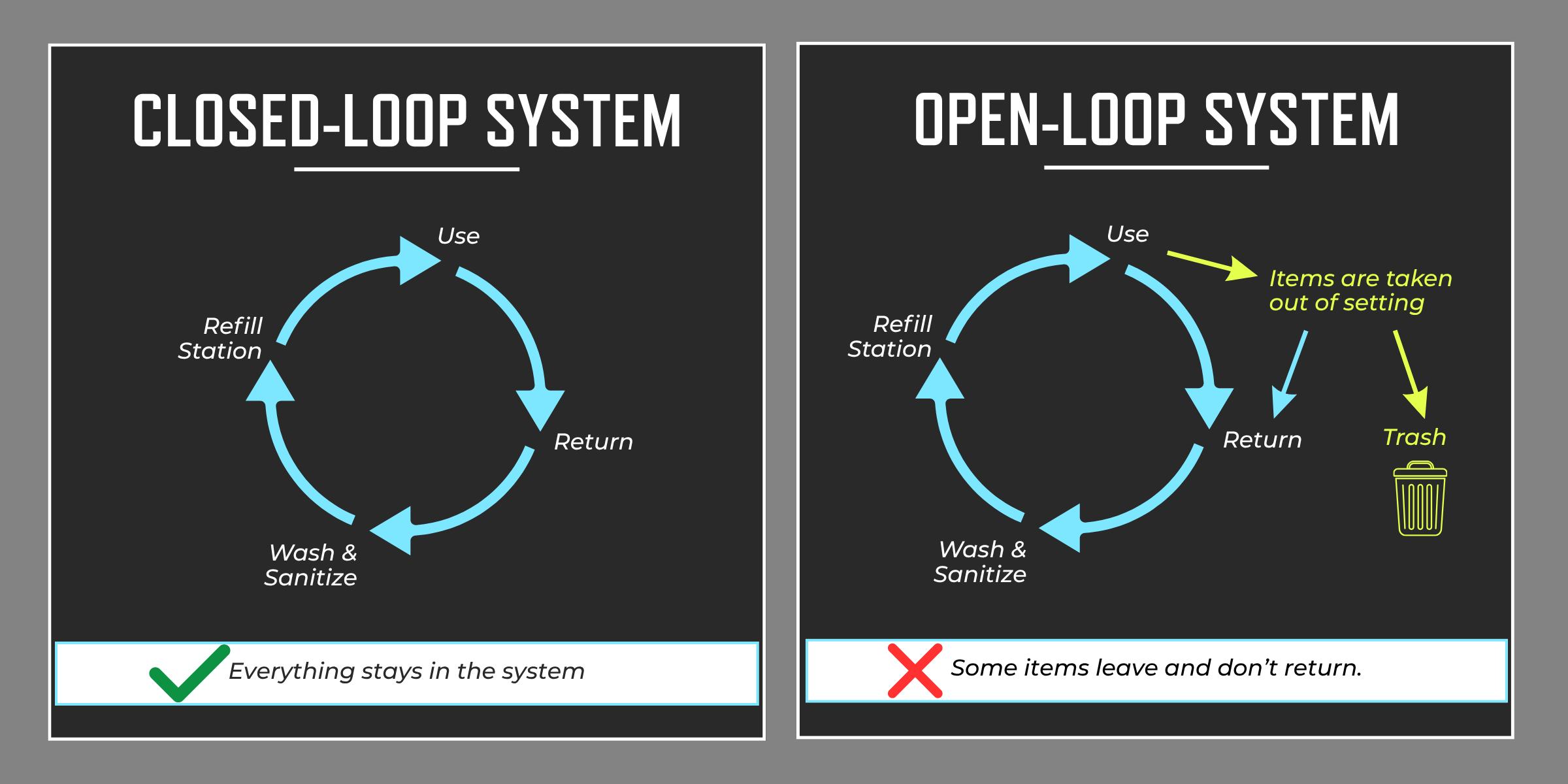
However, she soon realized the real challenge wasn’t the container itself—it was the context. Restaurants are chaotic: orders vary, customers rotate, and take-out containers disappear. So, instead of forcing reuse into that environment, Takeout Takeout shifted toward closed-loop systems where it could better control the flow of containers and ensure they were returned, cleaned, and reused.
The first test came through a pilot with Abundance Café, a subscription-based meal delivery service. Meals were delivered in reusable containers, which were then collected at the next delivery, washed, and reused for future orders, all at no extra charge to the consumer.
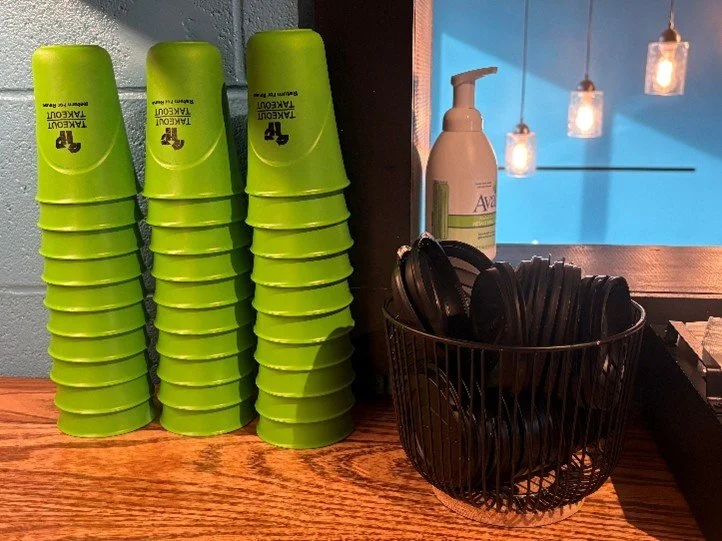
Reusable containers from Takeout Takeout.
The pilot proved the concept, but building the system behind it was far more complex. As a first-time founder, Schneider navigated operations, regulations, and business development with little precedent. Early accelerators like LEAP helped build foundational skills, but reuse didn’t fit neatly into traditional business frameworks. There was little market data, no standard model, and constant uncertainty.
Then Takeout Takeout joined NextCycle Michigan in 2024, and for the first time, Schneider was surrounded by others working on circular economy challenges, not just general business ideas. Instead of justifying reuse, she could focus on making it work.
Through NextCycle Michigan, Takeout Takeout:
Built connections across the reuse ecosystem
Increased visibility and credibility
Gained access to partnerships and funding opportunities
Learned from adjacent reuse models and real-world pilots
Those connections led to broader recognition and ultimately a $185,000 EGLE-funded Circular Economy Grant to expand pilots and build infrastructure.
And Takeout Takeout’s model continued to evolve. Rather than focusing on restaurants, Takeout Takeout now prioritizes controlled environments such as catering events, community spaces like churches, and other closed-loop settings. In these spaces, containers can be tracked, returns are predictable, and behavior becomes consistent. The result is a system that meets people where they already are and makes the better choice the easier one.
Kadeya
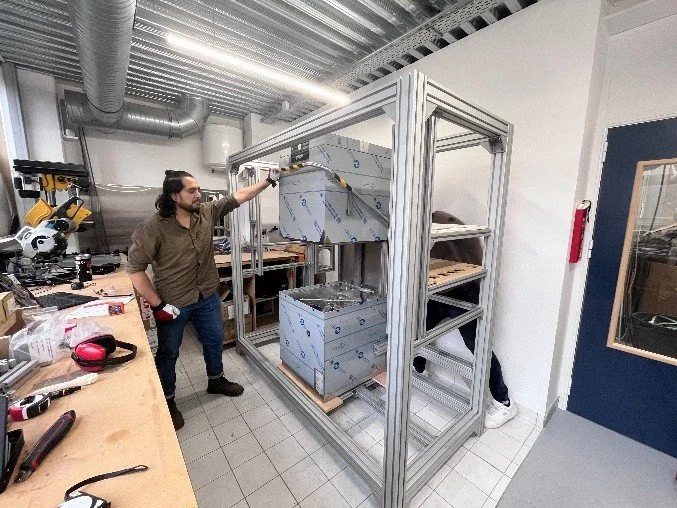
Kadeya staff assembling a refill station.
A similar question drove Manuela Zoninsein, founder of Kadeya, a system designed to replace single-use beverage bottles. “Why are we creating a new container every time,” she asked, “when the water already exists where we are?”
To answer that, Zoninsein started with behavior. Drawing inspiration from bike-sharing systems like Citi Bike, she realized people don’t actually want to own bikes. They want to get from point A to point B. The same is true for beverages. People don’t want the container; they need it to carry the liquid and the container is incidental. The real problem is logistics.
So, Kadeya flipped the model. Instead of selling bottled drinks, it created closed-loop kiosks that dispense beverages into reusable bottles that are picked up, used, returned to the station, sanitized within the kiosks, and recirculated.
Kadeya began in controlled, closed-loop environments such as construction sites, factories, and industrial workplaces where routines are fixed and behavior is predictable. And the results were immediate, with return rates reaching 99%, without deposits or penalties. Once workers learned the system, it became part of their day.
Kadeya doesn’t ask people to choose reuse. Instead, the system is marketed around delicious beverages customers already know and love, with reuse built in as the default.
Just as importantly, it replaced a major operational burden. Companies no longer had to order, transport, store, and manage pallets of bottled water. Kadeya’s stations, which are connected to existing water infrastructure, eliminated that entire process.
Behind the system is a small, highly specialized team that blends engineering, operations, and consumer insight. Together, they bring backgrounds spanning climate and clean tech, industrial design, go-to-market strategy, and on-the-ground system operations.
Kadeya joined NextCycle Michigan in 2023. The accelerator helped the team to plan for scaling operations by building relationships with potential customers, gaining insight into circular economy best practices, and reinforcing a key strategy: start local, prove the model, then expand. Those connections are now paving the way for expansion beyond Chicago, including planned pilots in Michigan in 2026.
Zoninsein sees reuse scaling in phases, starting in closed environments, expanding into semi-open systems like stadiums and campuses, and eventually reaching fully open spaces like transit hubs and convenience stores. By then, the system and behavior will already be familiar.
Nowhere Collective
In Chicago, Nowhere Collective is tackling reuse in consumer goods like textiles and other everyday materials. Founder Katy Osborn set out to interrupt a familiar moment: what to do when a piece of clothing is worn, torn, blemished or outdated. Typically, the most convenient options are donate to thrift store or toss out. Osborn started mending and embellishing garments with wearable art in the form of embroidery.
Looking around for outlets to sell her wares, she realized that there are no handmade markets or digital marketplaces tailored to upcycling artisans. She launched Nowhere Collective to connect people with local artists who transform these unwanted items into something new and meaningful, often as art, home goods, and fashion, keeping materials in motion and within the community.
Osborn believes people aren’t intentionally wasteful; they’re operating within systems that prioritize convenience. So rather than asking people to change or make a sacrifice, Nowhere Collective redesigns the moment of decision.
“We’ve created systems where the easiest option is often the most harmful,” Osborn said. “People don’t want that, but they’re just trying to get through their day.”
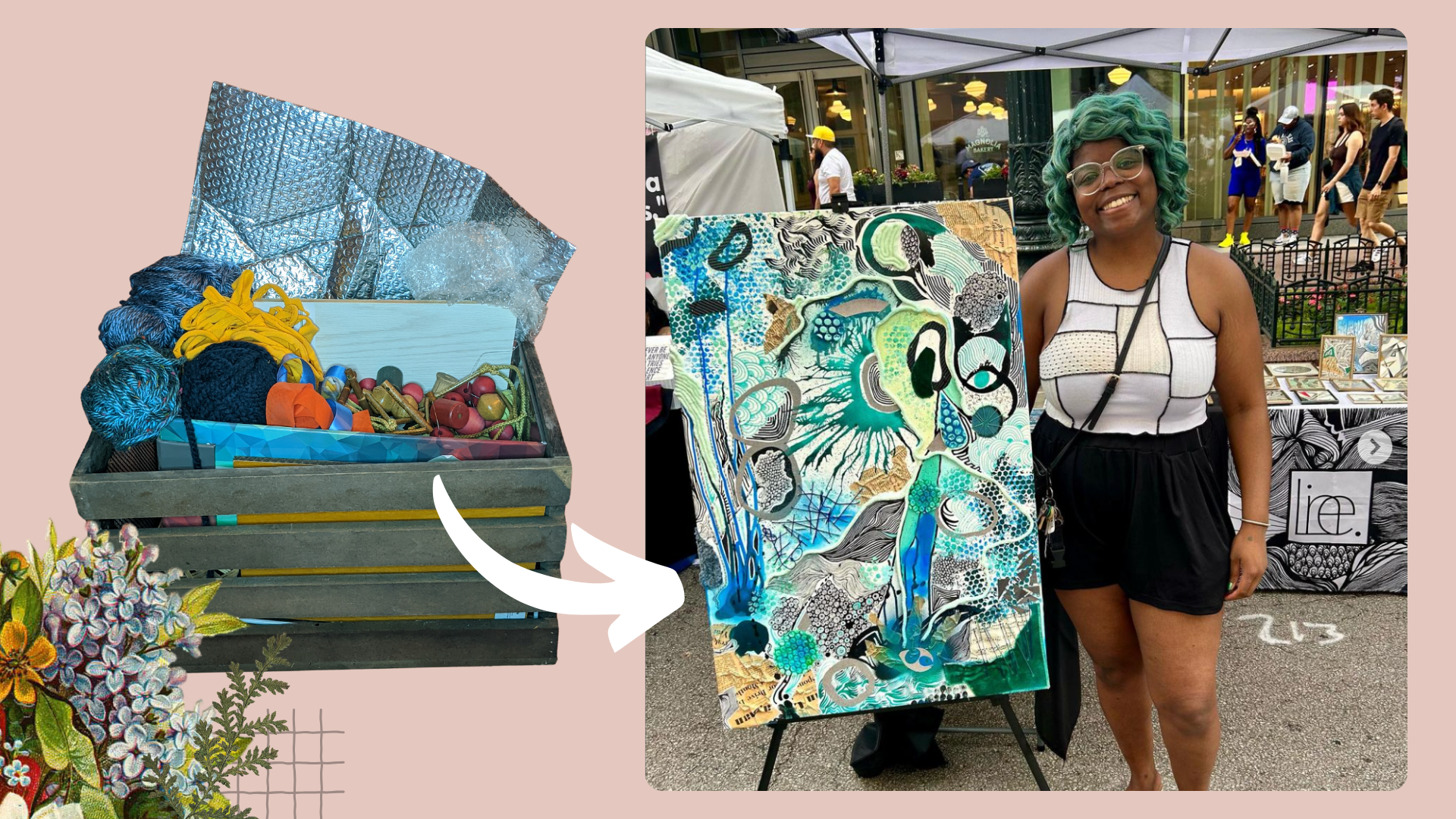
Artist displaying artwork made from recovered textiles at Nowhere Collective’s Trashy Market.
The model began with in-person “Trashy Markets,” where artists working with reclaimed materials gather to sell and share their work. And they created a space for connection. People brought in items and passed them directly to someone who valued them just as much. A grandmother’s leather jacket, for example, could be carefully transformed into a leather purse, preserving both the material and the meaning.
The markets also showed that while materials and makers were interested, the connection between them could be stronger. So, Nowhere Collective began exploring a digital platform that connects people directly to artists, allowing materials to be passed along, transformed, and tracked. In the process, reuse becomes visible and personal.
That model took shape more clearly during Osborn’s time in NextCycle Michigan in 2024. Through the accelerator, she:
refined the business model
gained critical support to begin building the digital platform, connecting with a development firm and university partners who helped bring the early version to life.
Just as important was the shift in perspective. Surrounded by teams focused on specific waste streams, Osborn realized her role was different. “I’m working on the culture of reuse,” she said.
That insight clarified both the challenge and the opportunity. Instead of measuring impact solely through volume, Nowhere Collective focuses on behavior change, local economic impact, and strengthening community connections.
Nowhere Collective’s next step is to complete the digital platform and create a model that can be replicated community by community.
Changing the System, Not the Person
Across food, beverages, and consumer goods, these models point to the same idea: reuse doesn’t fail because people don’t care. It fails because the system makes waste easier.
Takeout Takeout, Kadeya, and Nowhere Collective each approach the problem differently, but all start in the same place: redesigning the moment of decision. The question becomes less about individual choice and more about what options are available.
If reuse is built into the system where it’s visible, accessible, and intuitive, it stops feeling like an extra step and starts becoming the default.